Google Ads vs. Meta Ads: Unlocking Superior ROI for Your Brand
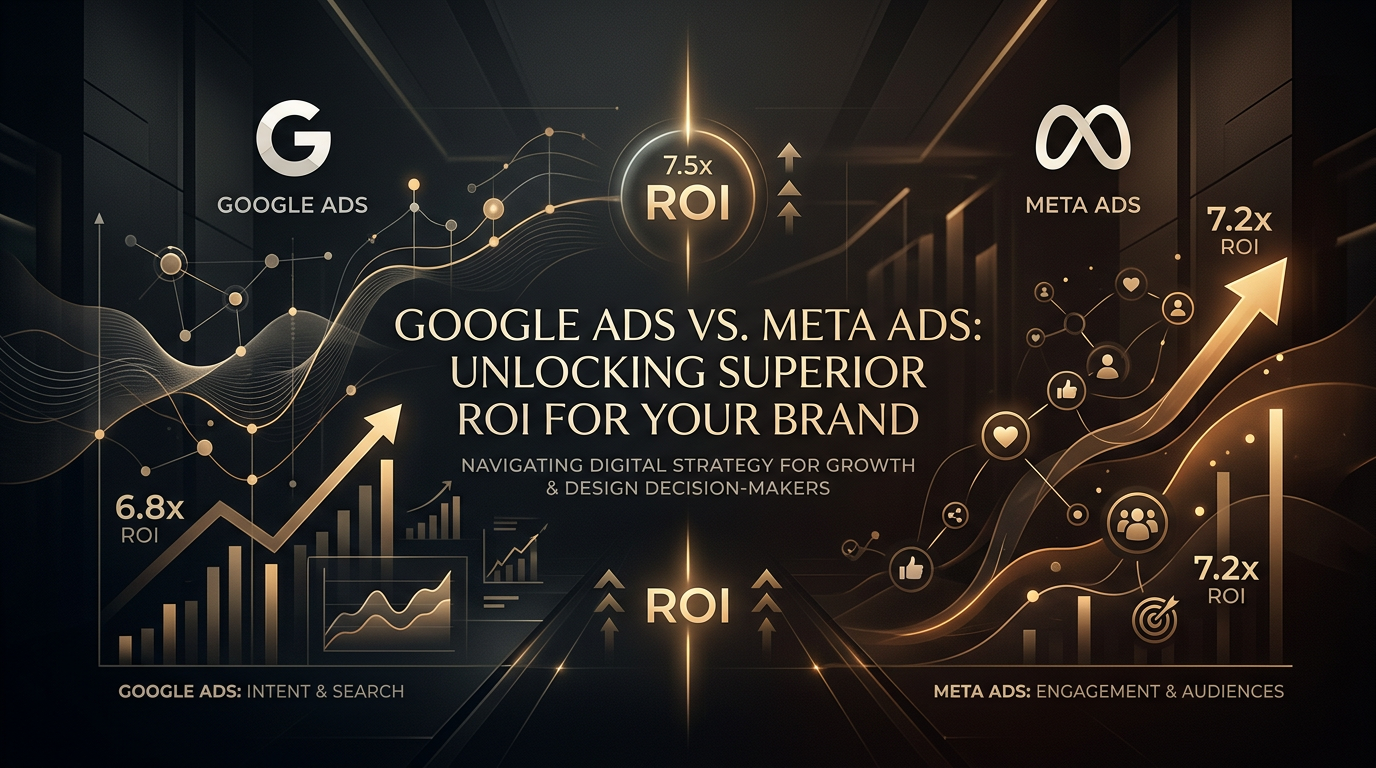
Navigating the digital advertising landscape can feel like a high-stakes game. This article cuts through the noise, comparing Google Ads and Meta Ads to help decision-makers in design and growth teams determine which platform offers the best ROI for their unique business goals.
Understand Digital Advertising
Google Ads: Get ROI by Catching Needs
Meta Ads (Facebook & Instagram): Build Demand and Engage for ROI
Work Together: Boost ROI with Google and Meta Ads
Google Ads and Meta Ads each have strengths. But they often work best together. You don't always pick one. Instead, use both in your marketing plan. Think of them as a team. Each helps at a different point in the customer's journey.
It's more than just clicks. We turn clicks into actions. These actions help your business grow. You might launch a product. You might want more brand awareness. Or you might drive sales. How you spend your ad budget matters. This article will explain Google Ads and Meta Ads. It will help you choose for your next campaigns.
Google Ads: Catching Needs for Good ROI
Google Ads used to be Google AdWords. It's great for people actively looking. Someone types a product into Google. They show a clear need. Google Ads makes your brand appear at the top. You become the answer to their search.
Google Ads Strengths:
High Intent Targeting: Users seek solutions. They are open to your ads. This often means more conversions. This is true for products people really want.
Big Network: Beyond search, Google's network is huge. It reaches over 90% of internet users. This helps with remarketing. It builds brand awareness on many sites, apps, and YouTube.
Exact Keywords: You can bid on exact keywords. This targets specific groups. Your ad money goes to those most likely to buy.
Trackable ROI: Strong data shows performance. You can change bids and keywords. You can also improve ad copy. This boosts your return.
But popular keywords can be costly. A good Google Ads plan needs research. It needs ongoing bid changes. And it needs good ad copy. For clear products with specific searches, Google Ads is key. It's great for direct marketing.
Meta Ads (Facebook & Instagram): Build Demand and Engage for ROI
Meta Ads includes Facebook, Instagram, Messenger, and its Audience Network. It's great for creating demand. It also builds strong communities. Google Ads targets active searchers. Meta Ads finds users scrolling their feeds. It shows them products they didn't know they needed. This makes it strong for branding. It helps with discovery. It also drives engagement.
Meta Ads Strengths:
Great Targeting: Meta uses user data. This includes age, location, and hobbies. It also uses job titles and past buys. This allows very detailed targeting.
Visual Stories: Meta uses many images and videos. It's great for brands showing products visually. It also helps tell a brand's story. This works well for e-commerce, fashion, and lifestyle brands.
Scale for Awareness: Meta has many users. It helps with big awareness campaigns. It reaches new audiences easily.
Community & Engagement: The platform helps interaction. Brands can talk with their audience. They can get comments, likes, and shares. This builds a sense of belonging.
Meta Ads works well. Yet, it needs creative ads. The sales process is often longer. Google searches are more direct. The challenge is ads that get attention. They must offer value in a busy feed.
Comparing ROI: When to Use Each
Calculating ROI for each platform is different. Here's how they compare:
Google Ads ROI Factors:
Direct Sales: Good for quick purchases. It helps with sign-ups or leads. This is because users have high intent.
Cost-Per-Click (CPC): This can be high for popular keywords. But good traffic makes it worth it.
Lifetime Value (LTV): High-intent users may have higher LTV. This is true if the product meets their exact need.
Short Sales Cycle: Good for products with quick decisions.
Meta Ads ROI Factors:
Brand Awareness & Reach: Great for top-of-mind awareness. It increases your audience size.
Cost-Per-Impression (CPM) / Cost-Per-Result: Often cheaper. It reaches many people. It drives video views or engagement.
Audience Discovery & Nurturing: Great for new products. It nurtures leads with remarketing. It builds loyal customers over time.
Longer Sales Cycle: Good for products needing thought. Also for educational content or visual appeal.
You don't always pick one. In fact, a combined plan often works best. It uses the strengths of both platforms.
Working Together: Better ROI with Google and Meta Ads
Many businesses don't choose one platform. They use both. They weave Google Ads and Meta Ads together. This creates a strong marketing plan. Think of them as partners. Each helps at a different stage of the customer journey:
Awareness: Use Meta Ads first. Introduce your brand or product. Use engaging visuals. Target a broad, specific audience.
Consideration: Use Meta for remarketing. Target those who saw your first ads. Give them more details or reviews. Also use Google Ads for general industry searches. Catch early-stage researchers.
Conversion: Use Google Search Ads for high-intent keywords. Target users ready to buy. Run dynamic remarketing ads. Do this on Google Display Network and Meta Ads. Remind users of products they viewed.
Loyalty & Advocacy: Keep using Meta Ads. Build a community. Offer special content. Promote user-made content. This builds long-term customer ties.
Understand each platform's strength. Design and growth teams can build a customer journey. It uses both intent-based and discovery-based ads. This brings maximum impact. It also greatly improves overall ROI.
Optimize for Success: Beyond Platform Choice
You might use Google Ads more. Or Meta Ads. But some things make all digital ads work well. These boost your ROI:
Clear Goals: Define what success means. Is it sales, leads, awareness, or app installs? Your goals guide your plan. They also show how you measure success.
Know Your Audience: Understand your target audience deeply. What are their problems? What do they want? How do they behave online? This guides platform choice and ad creation.
Great Creative: Design-led creative is a must. A good Google text ad works. An inspiring Instagram video works. Your ad must get attention. It must show value.
Landing Page Quality: Even the best ad fails with a bad landing page. Make sure your landing pages convert. They must load fast. They must be mobile-friendly. They must match your ad message.
Test and Change: Digital advertising changes. Always test headlines, copy, visuals, and calls to action. Also test targeting. Data-driven changes are key for lasting ROI.
Attribution Models: See how different points lead to a sale. Modern models give a clear picture. They show each platform's role. This prevents wrong ideas about individual ROI.
Focus on these elements. Your campaigns will perform better. You will also see which platform gives the best ROI. This is true for your specific business.
The Result: A Smart Mix for Good ROI
There's no single answer. No one platform offers better ROI always. It depends on your business. It depends on your audience. It depends on your product or service. And it depends on your campaign goals. For businesses wanting quick sales from active buyers, Google Ads often leads. For brands building awareness, creating demand, telling stories, and fostering community, Meta Ads is strong.
Most smart design and growth teams combine both. They use Google Ads for existing demand. They use Meta Ads for new demand. They also use it to build brand equity. This creates a strong ad system. You engage customers at every step. This boosts your reach, impact, and return on investment.
“The best strategies don't pick between Google and Meta. They make them work together for the customer.”
FAQ: Google Ads vs. Meta Ads for ROI
Which platform is better for quick sales?
Google Ads usually works better for immediate sales. It targets users actively searching. This shows a strong willingness to buy. Meta Ads can lead to sales. But it often focuses on creating demand and nurturing customers.
Which platform is better for brand awareness?
Meta Ads (Facebook & Instagram) is typically better for brand awareness. It has huge reach. It uses visuals. It also has good targeting. You can show your brand to many relevant people efficiently.
Can I use both Google Ads and Meta Ads together?
Yes, absolutely! This is often the best plan. It helps you get the most google ads vs meta ads roi. Use Google Ads to catch existing demand. Use Meta Ads to create new demand. Nurture leads using Meta Ads. This makes a complete and effective marketing plan.
What budget do I need for Google Ads vs. Meta Ads?
Both platforms are easy to start. You can begin with small budgets. Then you can spend more. But competitive keywords on Google Ads can raise your CPC. This needs careful budget control. Meta Ads can reach many people with lower budgets. But campaigns focused on sales still need competitive bidding. always start small. Adjust based on performance. Increase spending when data suggests it.
How important is creative content for each platform?
Creative content is key for both. But for different reasons. For Google Search Ads, strong ad copy is vital. It must match search intent. For Meta Ads, engaging images or videos are most important. They grab attention in busy social feeds.
Ready to Maximize Your Digital Ad Spending and ROI?
Don't leave your potential ROI to chance. Our experts can help you. We will create a strong ad strategy. It uses Google Ads, Meta Ads, and more. All to reach your business goals.
Frequently asked questions
Which platform is better for immediate sales?
Generally speaking, Google Ads tends to be more effective for immediate sales. This is because it targets users who are actively searching for a product or service, indicating a strong intent to make a purchase. While Meta Ads can certainly drive sales, it often plays a more significant role in demand generation and customer nurturing.
Which platform is better for brand awareness?
Undoubtedly, Meta Ads (Facebook & Instagram) is typically superior for brand awareness. Its immense reach, visually-driven platforms, and sophisticated targeting capabilities allow you to expose your brand to a vast yet highly relevant audience with remarkable efficiency.
Can I effectively use both Google Ads and Meta Ads together?
Absolutely! In fact, it's very often the most strategic approach to truly maximize your google ads vs meta ads roi. Integrating both platforms empowers you to skillfully capture existing demand through Google Ads while simultaneously generating new demand and nurturing leads via Meta Ads, creating a comprehensive and exceptionally effective marketing funnel.
What kind of budget do I need for Google Ads vs. Meta Ads?
Both platforms are quite accessible and can be started with relatively modest budgets, then scaled up. However, it's worth noting that competitive keywords on Google Ads can drive up your CPC (Cost Per Click), requiring careful budget management. Meta Ads can offer impressive reach for awareness campaigns even with lower budgets, but conversion-focused campaigns will still require competitive bidding. The golden rule is always to start small, continually optimize based on performance, and scale as your data dictates.
How important is creative content for each platform?
Creative content is absolutely crucial for both, though for distinct reasons. For Google Search Ads, compelling ad copy that deeply resonates with search intent is vital. For Meta Ads, on the other hand, highly engaging and visually appealing images or videos are paramount to capture fleeting attention within busy social feeds.
High Intent Targeting: Users actively seek solutions. Ads are more likely to work here. This often means more sales. This is especially true for wanted products or services. Think of searching "emergency plumber near me." An ad for a local plumber will likely lead to a call.
Visual Storytelling: Meta uses many images and videos. This is great for brands showing products. Or for telling a brand's story. This works well for e-commerce, fashion, and lifestyle brands. A fashion brand can show new collections visually. High-quality ads in feeds create demand.
Understand where each platform excels. Design and growth teams can build a customer journey. It uses both intent-based and discovery-based ads. This brings maximum impact. It also greatly improves overall ROI. Use strong attribution models from the start. This helps measure the full impact. It shows the true return across the whole customer path.
Attribution Modeling: Understand how different steps lead to a sale. Modern attribution models are key. They show each platform's unique role. This gives a clearer picture of ROI.
Maximize Your Ad ROI Now!
Ready to boost your digital ad performance and achieve exceptional ROI? Let our experts craft a winning strategy tailored to your unique goals.
Get the next one in your inbox.
Field notes, fresh case studies. No spam, unsubscribe any time.