Beyond the Click: What is Full-Funnel Marketing and Why It Matters for Design & Growth
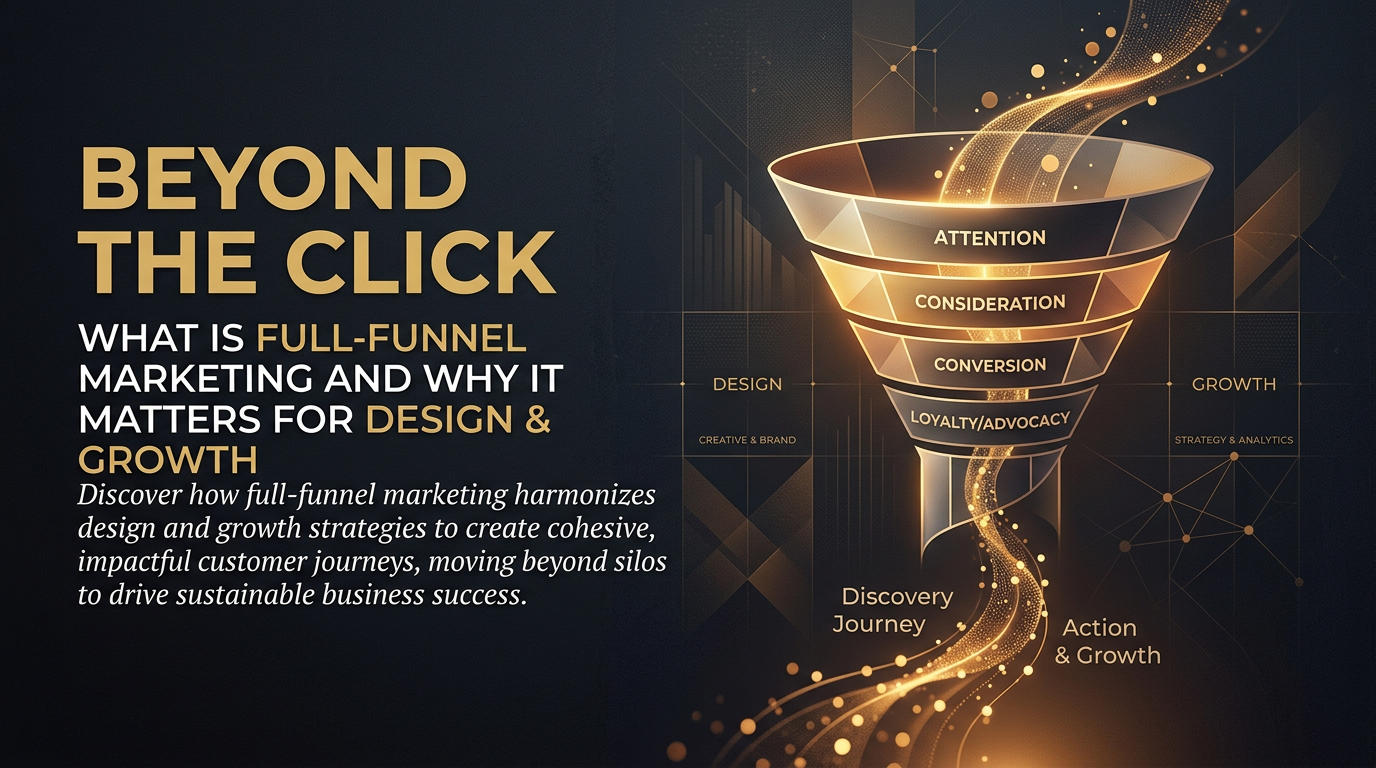
Discover how full-funnel marketing harmonizes design and growth strategies to create cohesive, impactful customer journeys, moving beyond silos to drive sustainable business success.
The Silo Problem: Why Traditional Marketing Falls Short
For too long, marketing and design teams have operated in silos. Marketing often focuses on the top-of-funnel activities – brand awareness, lead generation, and initial engagement – measured by metrics like impressions, clicks, and website visits. Design, meanwhile, has been seen as a downstream function, polishing UIs, crafting brand guidelines, or improving product-specific experiences. This fractured approach, while seemingly efficient in its specialized lanes, often leads to a disjointed customer experience. Prospects might be lured in by compelling ad campaigns, only to encounter an inconsistent brand voice, a clunky onboarding process, or a product that doesn't live up to the initial promise. The result? High bounce rates, low conversion rates, and ultimately, a substantial missed opportunity for sustainable growth. This is where the concept of full-funnel marketing emerges not just as a buzzword, but as a critical strategic imperative.
Defining Full-Funnel Marketing: A Holistic Perspective
At its core, full-funnel marketing is a strategic approach that considers and optimizes every touchpoint a customer has with your brand, from the very first moment of awareness to post-purchase loyalty and advocacy. It’s about understanding that the customer journey isn't a linear path, but a complex ecosystem where every interaction influences the next. Unlike traditional marketing, which often concentrates efforts on one or two stages, full-funnel marketing demands a holistic view. It integrates various channels, tactics, and creative expressions, ensuring a cohesive and compelling narrative that guides the user seamlessly through their entire lifecycle. Rather than seeing a campaign as a series of disparate tasks, it views it as a continuous, interconnected experience designed to build trust, demonstrate value, and foster long-term relationships.
Full-funnel marketing isn't just about getting attention; it's about earning loyalty at every step.
The Stages of the Full-Funnel: Awareness to Advocacy
While models can vary, a widely accepted framework for the marketing funnel includes:
- Awareness: This is the initial stage where potential customers become aware of your brand, product, or service. Activities here include content marketing, social media campaigns, PR, SEO, and paid advertising designed to capture attention and introduce your value proposition.
- Consideration: Once aware, users move into evaluating options. Here, they're actively researching and learning more. Design and marketing efforts focus on providing valuable information through in-depth blog posts, case studies, webinars, product demos, and comparative content to help them assess your suitability.
- Conversion: This is the pivotal moment where a prospect takes a desired action, whether it's making a purchase, signing up for a trial, or filling out a lead form. UX design, clear calls-to-action, compelling offers, and streamlined processes are critical here.
- Retention/Loyalty: The journey doesn't end at conversion. This stage focuses on keeping existing customers engaged and satisfied. Excellent customer service, personalized communication, loyalty programs, and consistent product value are key.
- Advocacy: The ultimate goal, where loyal customers become brand evangelists, actively recommending your product or service to others. This is fueled by exceptional experiences, referral programs, and opportunities for customers to share their positive stories.
Each of these stages requires distinct yet harmonized strategies from both design and growth teams for effective full-funnel marketing.
The Integrated Role of Design in a Full-Funnel Strategy
In a full-funnel approach, design is no longer a downstream executor; it’s a strategic partner woven into the fabric of the entire customer journey. At the Awareness stage, design defines the brand's visual identity, creating memorable logos, compelling ad creatives, and a consistent aesthetic that resonates with target audiences. For Consideration, design shapes the user experience of your website and content, ensuring information is discoverable, digestible, and visually appealing. During Conversion, UX/UI design is paramount, optimizing forms, checkout processes, and calls-to-action for frictionless completion. Post-conversion, for Retention and Advocacy, design influences product usability, creates engaging onboarding flows, and crafts effective communication materials for customer support and loyalty programs. Design thinking principles, such as user research and prototyping, become instrumental in identifying pain points and opportunities across the entire funnel, ensuring that every touchpoint not only looks good but performs effectively in a full-funnel marketing context.
Growth Hacking and Full-Funnel Synergy
Growth teams, with their data-driven and experimentation-focused methodologies, are natural partners in a full-funnel marketing strategy. While traditional growth hacking often emphasizes rapid iteration and optimization at specific points in the funnel (e.g., A/B testing landing pages for conversion), a full-funnel approach elevates this to a systemic level. Growth teams can apply their expertise to analyze data across all stages, identifying bottlenecks not just in conversion, but in awareness (e.g., optimizing ad spend for specific channels), consideration (e.g., improving content engagement metrics), and even retention (e.g., reducing churn through proactive interventions). They can then collaborate with design to hypothesize solutions, implement experiments, and measure the impact of changes on the entire funnel, leading to more sustainable and interconnected improvements rather than isolated gains.
Unlocking Business Value: Benefits of a Full-Funnel Approach
Embracing full-funnel marketing offers significant advantages for businesses looking beyond short-term gains:
- Improved Customer Experience: A cohesive journey reduces friction and builds trust, leading to more satisfied customers.
- Higher Conversion Rates: By optimizing every stage, you reduce drop-offs and guide more prospects to becoming customers.
- Increased Customer Lifetime Value (CLTV): Focus on retention and advocacy ensures customers stay longer and spend more.
- Enhanced Brand Loyalty: Consistent messaging and a positive experience foster deeper connections with your brand.
- Better Resource Allocation: Understanding the entire journey helps marketing and design teams prioritize efforts where they'll have the greatest impact, avoiding wasted spend on isolated initiatives.
- Actionable Insights: A holistic view provides richer data for identifying systemic issues and opportunities for growth.
- Competitive Advantage: Delivering a superior, end-to-end customer experience sets you apart in crowded markets.
Ultimately, full-funnel marketing is about creating a virtuous cycle where awareness fuels consideration, consideration drives conversion, and conversion cultivates loyalty and advocacy, all working in unison to accelerate sustainable business growth.
Implementing Full-Funnel Marketing: A Strategic Imperative
Transitioning to a full-funnel marketing approach requires a fundamental shift in mindset and operational structure. It begins with breaking down departmental silos and fostering a culture of collaboration between marketing, design, sales, and product teams. Key steps include:
- Customer Journey Mapping: Start by thoroughly mapping your customers' journey, identifying all touchpoints, pain points, and opportunities across each stage.
- Shared Goals & Metrics: Establish common goals and KPIs that span the entire funnel, moving beyond individual departmental targets.
- Integrated Technology Stack: Utilize platforms that allow for seamless data integration and personalized communication across channels.
- Cross-Functional Collaboration: Create agile teams that include members from various departments to work on funnel optimization initiatives.
- Continuous Testing & Iteration: Adopt a growth mindset, constantly testing hypotheses, analyzing data, and iterating on strategies.
By intentionally designing, managing, and optimizing the entire customer journey, organizations can not only improve immediate results but also build enduring customer relationships and unlock exponential, sustainable growth with full-funnel marketing.
What is considered full-funnel marketing?
Full-funnel marketing is a comprehensive strategy that addresses and optimizes every stage of the customer journey, from initial brand awareness to post-purchase loyalty and advocacy. It ensures a cohesive and integrated experience across all customer touchpoints.
What are the 5 stages of full-funnel marketing?
The 5 commonly recognized stages of full-funnel marketing are Awareness, Consideration, Conversion, Retention/Loyalty, and Advocacy. Each stage requires specific marketing and design strategies to guide the customer effectively.
Why is full-funnel marketing important for design and growth teams?
For design and growth teams, full-funnel marketing is crucial because it breaks down silos, encouraging collaboration and alignment. It ensures that design efforts enhance the customer experience at every stage, while growth strategies optimize performance across the entire journey, leading to more impactful results and sustainable business growth.
How does design contribute to full-funnel marketing?
Design contributes to full-funnel marketing by shaping brand identity (awareness), crafting engaging content and user experiences (consideration), optimizing conversion pathways (conversion), and enhancing product usability and customer communication (retention/loyalty and advocacy). It ensures visual consistency and functional effectiveness throughout the entire customer journey.
What's the difference between full-funnel and traditional marketing?
Traditional marketing often focuses on specific, isolated stages of the funnel (e.g., just lead generation or just advertising). Full-funnel marketing, in contrast, takes a holistic view, integrating all stages and channels to create a seamless, end-to-end customer experience, emphasizing long-term relationships and customer lifetime value rather than single transactions.
Ready to transform your fractured marketing efforts into a cohesive customer journey?
Our strategic design consultants specialize in aligning design and growth to unlock full-funnel marketing success. Let's build truly impactful experiences together.
Talk to Our ExpertsFrequently asked questions about full-funnel marketing
What is considered full-funnel marketing?
Full-funnel marketing is a comprehensive strategy that addresses and optimizes every stage of the customer journey, from initial brand awareness to post-purchase loyalty and advocacy. It ensures a cohesive and integrated experience across all customer touchpoints.
What are the 5 stages of full-funnel marketing?
The 5 commonly recognized stages of full-funnel marketing are Awareness, Consideration, Conversion, Retention/Loyalty, and Advocacy. Each stage requires specific marketing and design strategies to guide the customer effectively.
Why is full-funnel marketing important for design and growth teams?
For design and growth teams, full-funnel marketing is crucial because it breaks down silos, encouraging collaboration and alignment. It ensures that design efforts enhance the customer experience at every stage, while growth strategies optimize performance across the entire journey, leading to more impactful results and sustainable business growth.
How does design contribute to full-funnel marketing?
Design contributes to full-funnel marketing by shaping brand identity (awareness), crafting engaging content and user experiences (consideration), optimizing conversion pathways (conversion), and enhancing product usability and customer communication (retention/loyalty and advocacy). It ensures visual consistency and functional effectiveness throughout the entire customer journey.
What's the difference between full-funnel and traditional marketing?
Traditional marketing often focuses on specific, isolated stages of the funnel (e.g., just lead generation or just advertising). Full-funnel marketing, in contrast, takes a holistic view, integrating all stages and channels to create a seamless, end-to-end customer experience, emphasizing long-term relationships and customer lifetime value rather than single transactions.
Frequently asked questions
What is considered full-funnel marketing?
Full-funnel marketing is a comprehensive strategy that addresses and optimizes every stage of the customer journey, from initial brand awareness to post-purchase loyalty and advocacy. It ensures a cohesive and integrated experience across all customer touchpoints.
What are the 5 stages of full-funnel marketing?
The 5 commonly recognized stages of full-funnel marketing are Awareness, Consideration, Conversion, Retention/Loyalty, and Advocacy. Each stage requires specific marketing and design strategies to guide the customer effectively.
Why is full-funnel marketing important for design and growth teams?
For design and growth teams, full-funnel marketing is crucial because it breaks down silos, encouraging collaboration and alignment. It ensures that design efforts enhance the customer experience at every stage, while growth strategies optimize performance across the entire journey, leading to more impactful results and sustainable business growth.
How does design contribute to full-funnel marketing?
Design contributes to full-funnel marketing by shaping brand identity (awareness), crafting engaging content and user experiences (consideration), optimizing conversion pathways (conversion), and enhancing product usability and customer communication (retention/loyalty and advocacy). It ensures visual consistency and functional effectiveness throughout the entire customer journey.
What's the difference between full-funnel and traditional marketing?
Traditional marketing often focuses on specific, isolated stages of the funnel (e.g., just lead generation or just advertising). Full-funnel marketing, in contrast, takes a holistic view, integrating all stages and channels to create a seamless, end-to-end customer experience, emphasizing long-term relationships and customer lifetime value rather than single transactions.
Get the next one in your inbox.
Field notes, fresh case studies. No spam, unsubscribe any time.